Where VAIVA comes into play in Automotive
Automotive programs are becoming increasingly complex: more sensors, more software, more validation pressure, shorter release cycles. We help teams manage this with simulation-based functional development, reproducible development environments, and audit-ready engineering processes — end to end from concept to series production.
Instead of individual point solutions, we deliver a cohesive engineering ecosystem of products and services.
Products and solutions that make a difference in practice
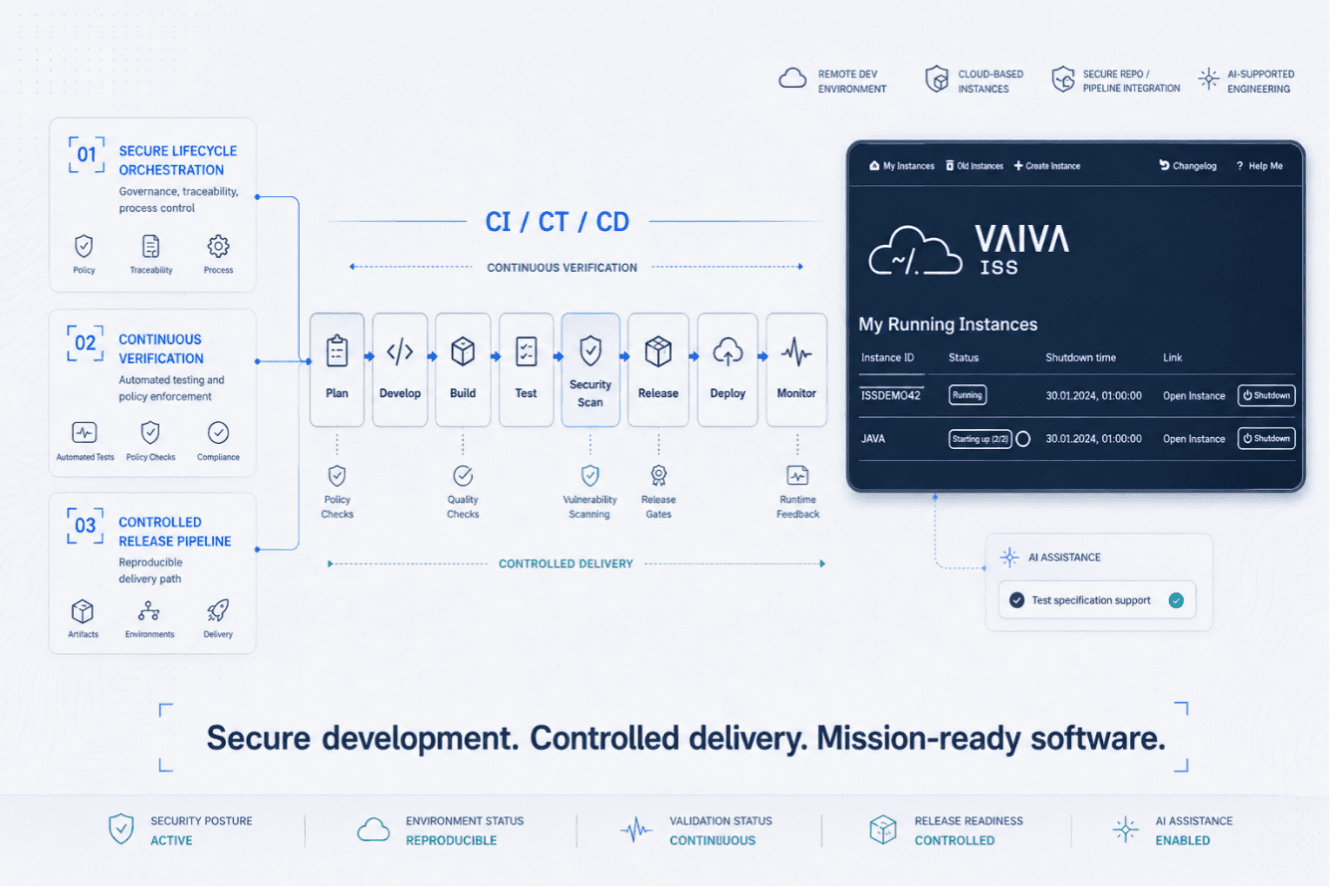
Secure Software Delivery for mission-critical systems
Mission systems, autonomy functions, optronics, support tools, embedded controllers, and digital interfaces must be developed and maintained under conditions that require both cyber resilience and engineering discipline.
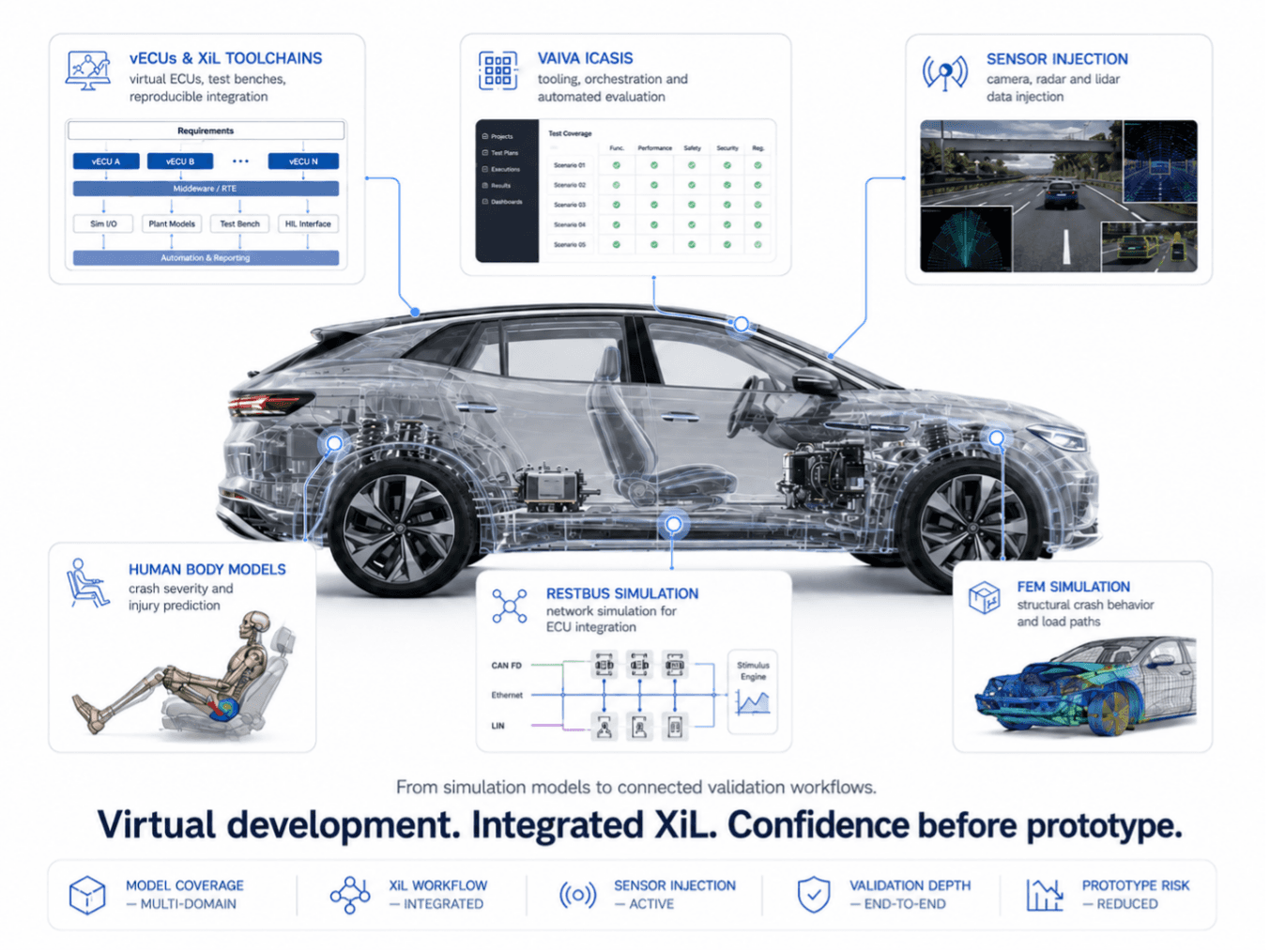
XiL Engineering for virtual ECU validation
Modern vehicle development depends on being able to validate ECU software before all physical components and complete vehicle networks are available. Restbus simulation makes this possible by simulating missing network participants, so that the control unit or function under test can be evaluated in realistic test environments.
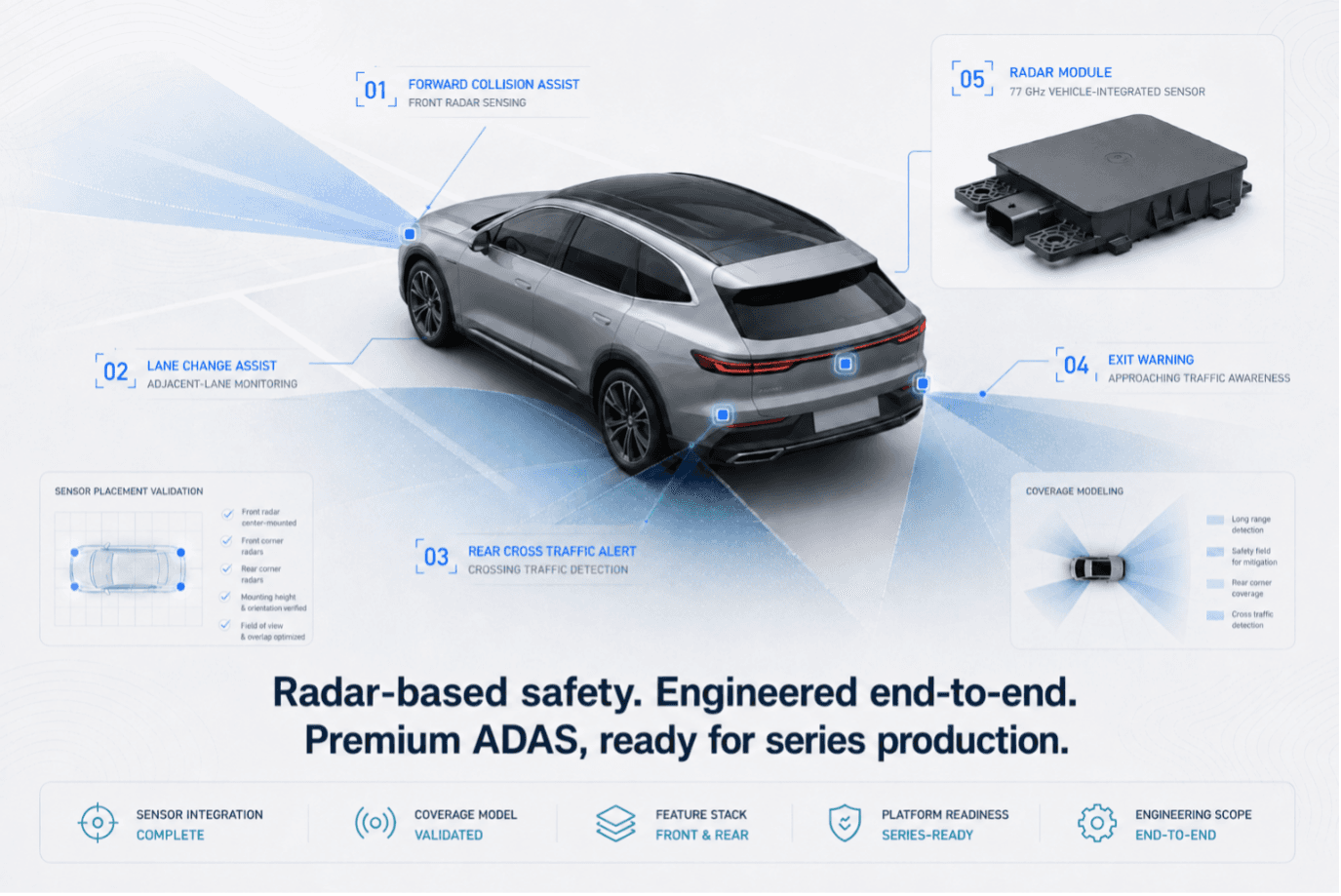
Premium ADAS Development for series production
For a premium automotive OEM, VAIVA developed several radar-based safety functions, fully along the V-model—from functional definition and architecture through software development and software testing to final system validation.
Secure Software Delivery for mission-critical systems
Mission systems, autonomy functions, optronics, support tools, embedded controllers, and digital interfaces must be developed and maintained under conditions that require both cyber resilience and engineering discipline.
XiL Engineering for virtual ECU validation
Modern vehicle development depends on being able to validate ECU software before all physical components and complete vehicle networks are available. Restbus simulation makes this possible by simulating missing network participants, so that the control unit or function under test can be evaluated in realistic test environments.