What makes VAIVA different for Defence
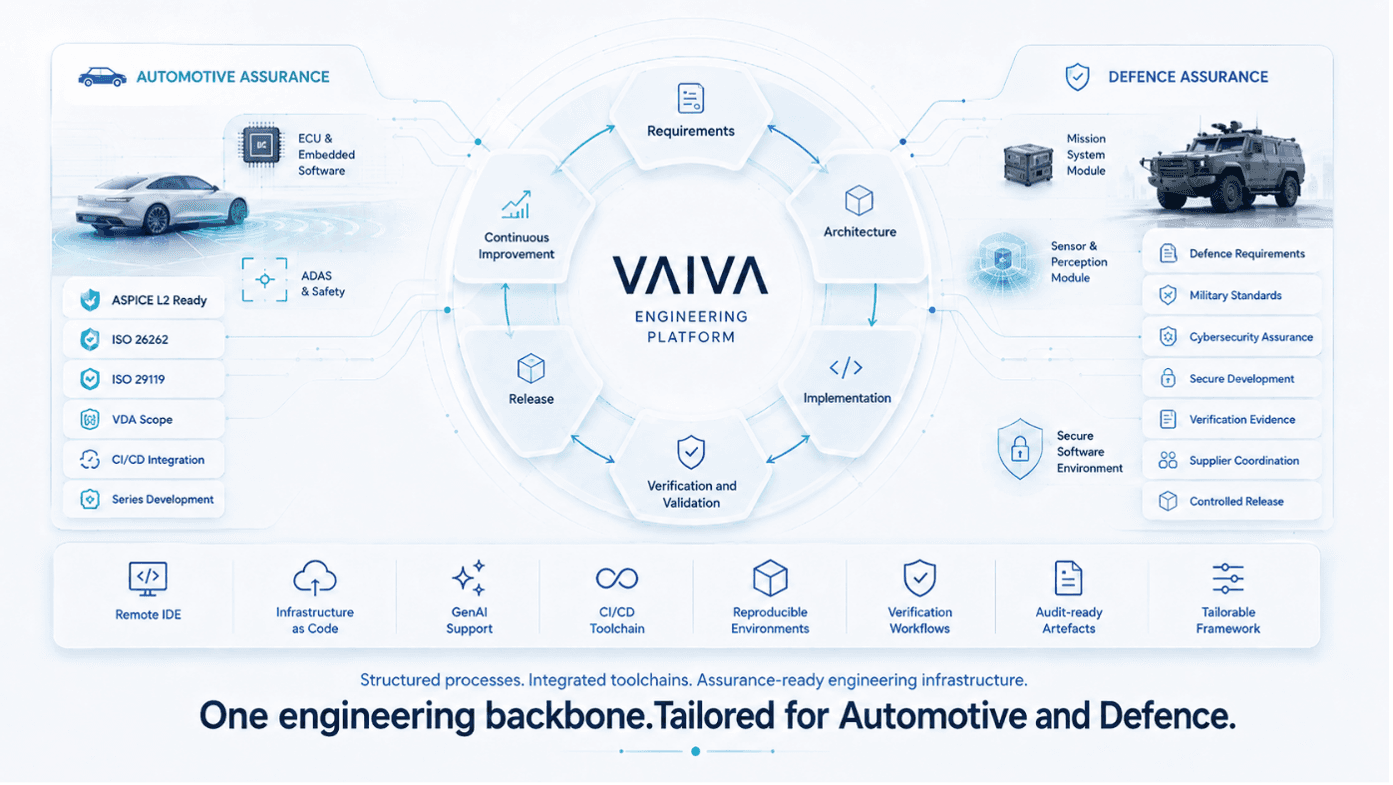
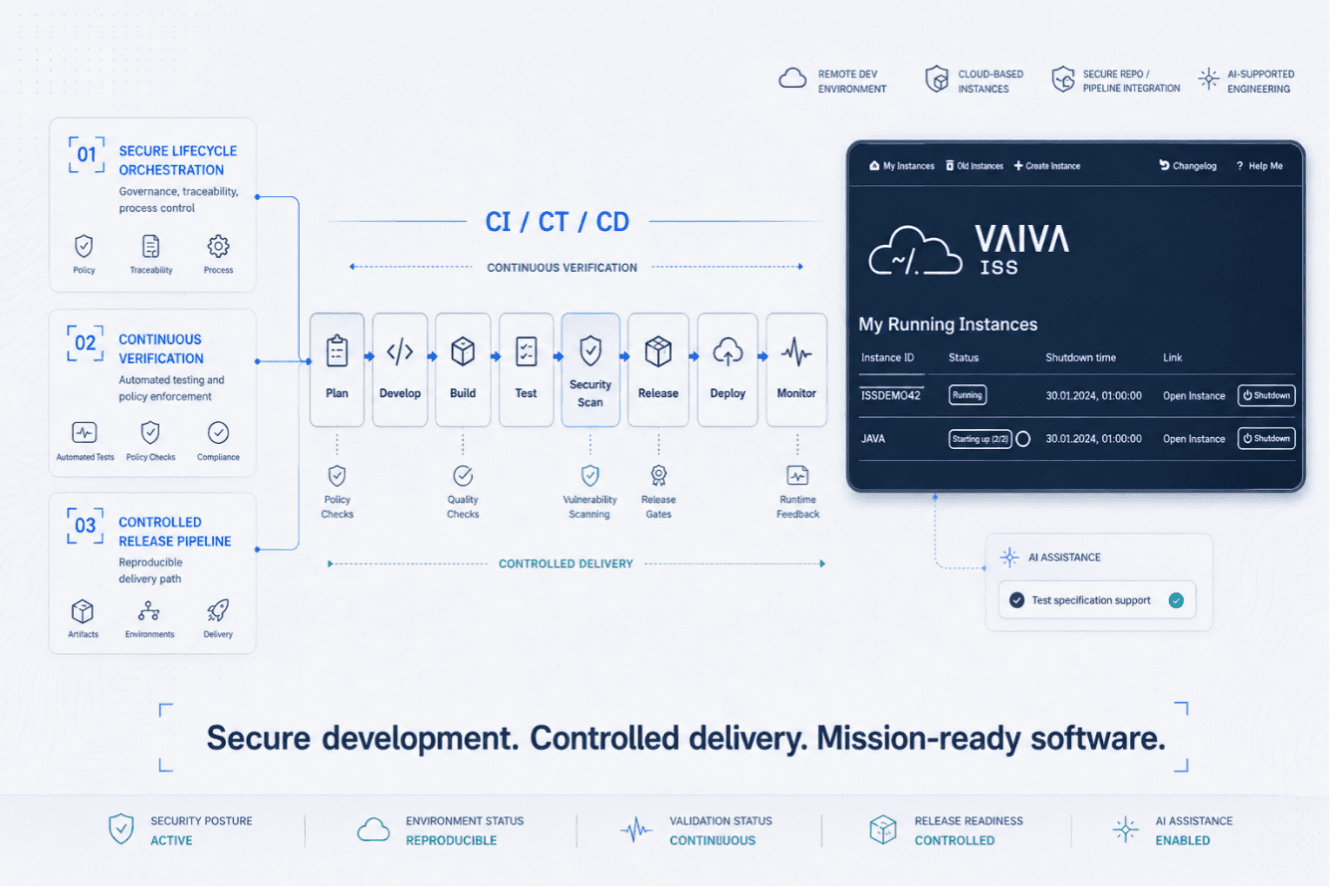
Defence programs are under pressure: deliver faster, higher cyber resilience, more software complexity, stricter auditability. At the same time, toolchains are often fragmented, development environments inconsistent, security processes too late in the lifecycle.
VAIVA brings a different background than classic defense suppliers: an engineering framework shaped over years in safety-critical automotive series programs — with ASPICE maturity, V-model discipline, proven toolchains, and continuous process improvement. We adapt this foundation to military development environments, cybersecurity expectations, compliance requirements, and mission logic.
The result: Defense capability with automotive engineering discipline.
Products and solutions that make a difference in practice
What the video does not show
Before a vehicle with our autonomy kit can reach a destination on its own, it first has to answer three fundamental questions: Where am I? What is around me? And how should I get there?
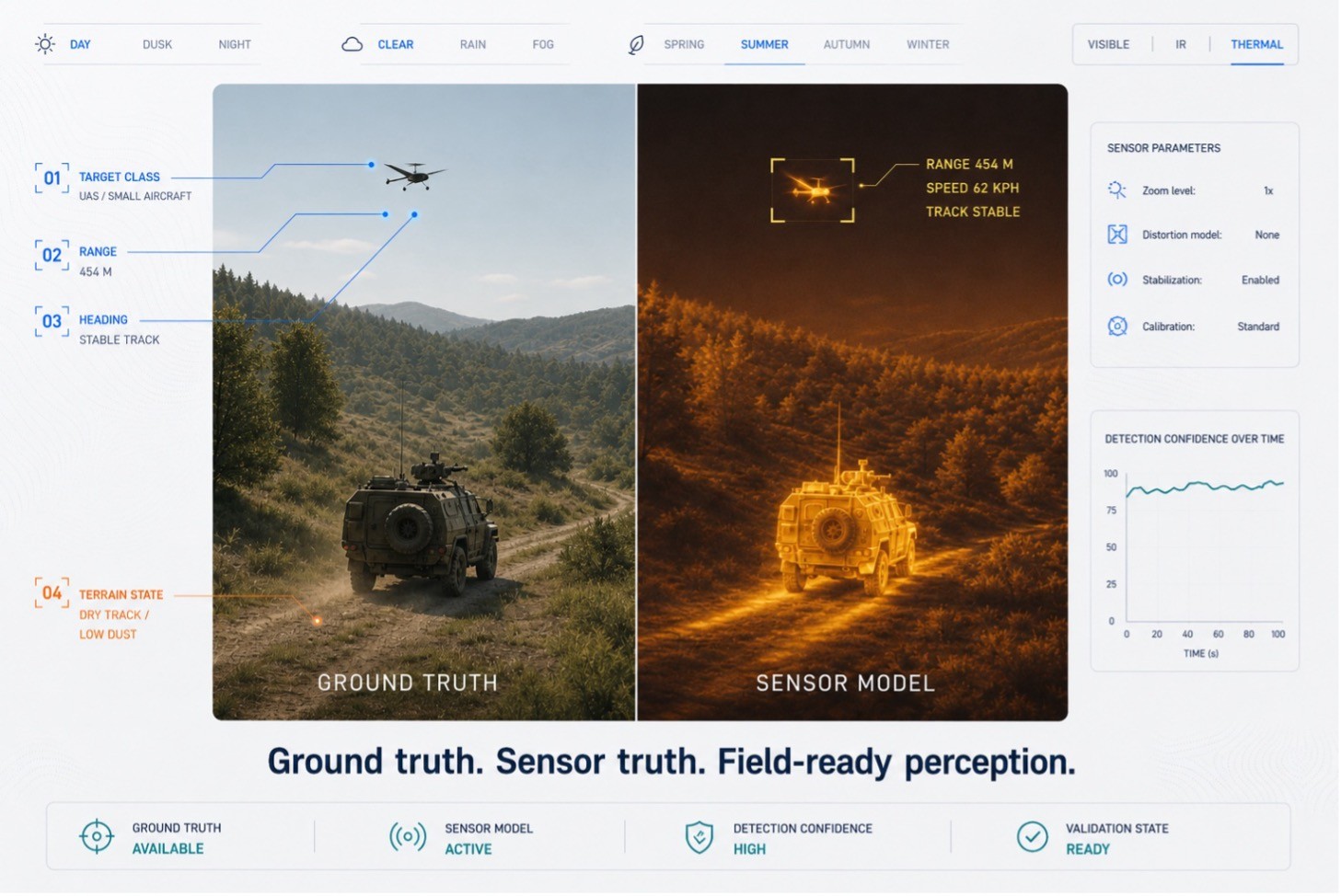
Realistic perception before field deployment
Sensor-based defence functions are only as reliable as the perception on which they are built. Whether it is counter-UAS, force protection, reconnaissance, autonomous mobility, or optronic target acquisition and sighting systems: development teams must understand how their systems behave before physical tests are available and before costly test campaigns begin.
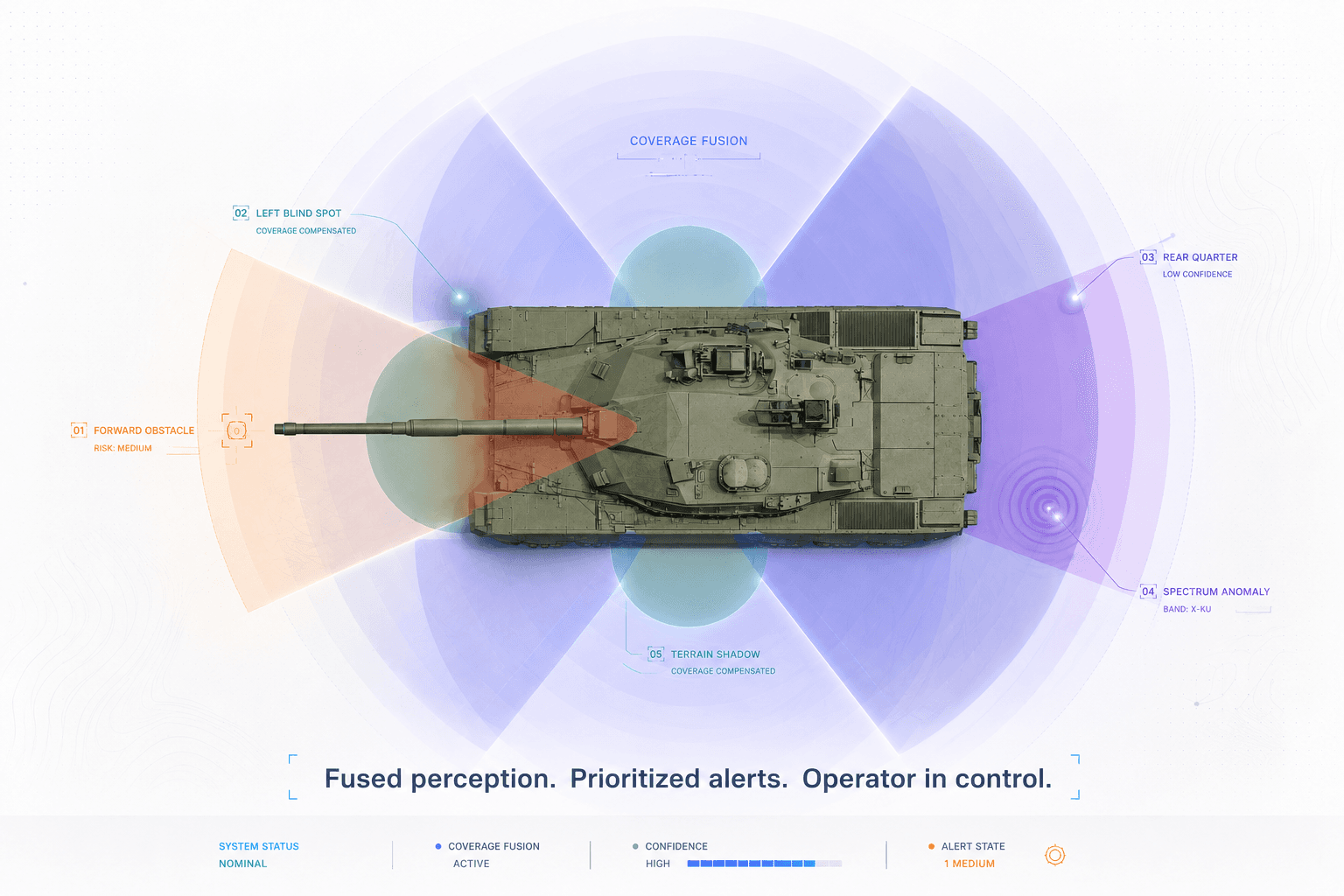
Intelligent networking for secure mobility
Protected mobility platforms must be able to perceive, interpret, and respond to their environment, even where human vision is limited and the complexity of sensor systems increases.
UGV Autonomy Kit
UGV autonomy must not be tied to a single chassis or a rigid system architecture. The modular VAIVA Autonomy Kit is designed to integrate autonomous capabilities into new and existing vehicle platforms in a configurable manner and to expand them step by step.
What the video does not show
Before a vehicle with our autonomy kit can reach a destination on its own, it first has to answer three fundamental questions: Where am I? What is around me? And how should I get there?